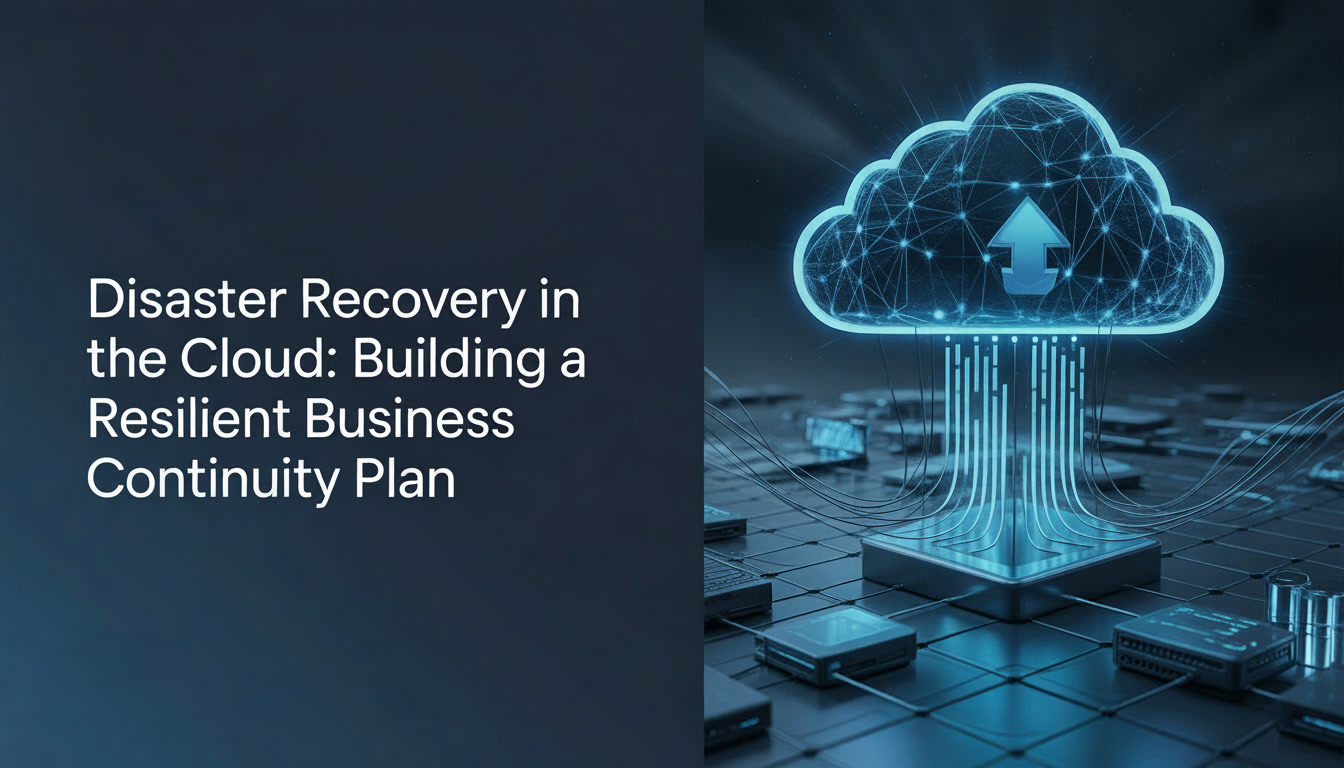
In today’s always-on digital economy, downtime is no longer just an inconvenience — it is a direct threat to revenue, reputation, customer trust, and regulatory compliance. Cyberattacks, hardware failures, natural disasters, human error, and software outages can disrupt operations at any time.
Cloud computing has transformed disaster recovery by enabling scalable, automated, and cost-effective solutions without the need for expensive secondary data centers.
WHAT IS CLOUD DISASTER RECOVERY?
Disaster Recovery (DR) refers to strategies and processes used to restore systems, data, and operations after a disruption. Cloud-based DR uses cloud infrastructure to replicate and recover workloads quickly, often called Disaster Recovery as a Service (DRaaS).
WHY DISASTER RECOVERY MATTERS
Downtime can cause:
• Revenue loss
• Operational disruption
• Customer dissatisfaction
• Regulatory penalties
• Data loss
• Reputational damage
Cloud DR ensures critical functions continue with minimal interruption.
RTO AND RPO EXPLAINED
Recovery Time Objective (RTO):
Maximum acceptable time to restore systems after a failure.
Recovery Point Objective (RPO):
Maximum acceptable data loss measured in time.
These metrics guide DR strategy design.
COMMON DISASTER SCENARIOS
• Cyberattacks and ransomware
• Cloud outages
• Hardware failures
• Network disruptions
• Data corruption
• Human errors
• Natural disasters
• Power failures
KEY CLOUD DR STRATEGIES
1) Backup and Restore
Regular backups stored in the cloud and restored when needed. Low cost but slower recovery.
2) Pilot Light
Minimal core services run continuously, allowing rapid scaling during a disaster.
3) Warm Standby
A reduced but fully functional environment operates continuously for faster failover.
4) Active-Active (Multi-Region)
Full systems run in multiple regions simultaneously, providing near-zero downtime but higher cost.
SECURITY CONSIDERATIONS
• Encrypt backups and data
• Strong access controls
• Isolated storage
• Protection against ransomware
• Continuous monitoring
AUTOMATION AND ORCHESTRATION
Cloud platforms enable:
• Automated failover
• Infrastructure provisioning
• Configuration management
• Recovery workflows
• Health monitoring
Automation reduces recovery time and human error.
MULTI-REGION RESILIENCE
Geographic redundancy protects against regional failures by replicating data and workloads across multiple locations.
TESTING AND VALIDATION
Regular testing is essential:
• Failover simulations
• Recovery drills
• Data restoration tests
• Performance validation
BUSINESS CONTINUITY PLANNING
A comprehensive plan includes:
• Risk assessment
• Business impact analysis
• Identification of critical systems
• Communication procedures
• Roles and responsibilities
• Recovery workflows
BEST PRACTICES FOR 2026
• Classify workloads by criticality
• Use immutable backups
• Implement continuous replication
• Automate failover
• Monitor proactively
• Ensure compliance
• Train staff regularly
BENEFITS OF CLOUD DR
• Faster recovery times
• Reduced downtime
• Lower infrastructure costs
• On-demand scalability
• Improved resilience
• Global availability
FUTURE TRENDS
• AI-driven failure prediction
• Autonomous recovery systems
• Edge-based backups
• Cyber resilience frameworks
• Automated compliance reporting
FINAL THOUGHTS
Disaster recovery in the cloud is essential for business survival in an unpredictable digital world. By defining recovery objectives, choosing appropriate strategies, automating processes, and testing regularly, organizations can ensure operational continuity even during major disruptions.