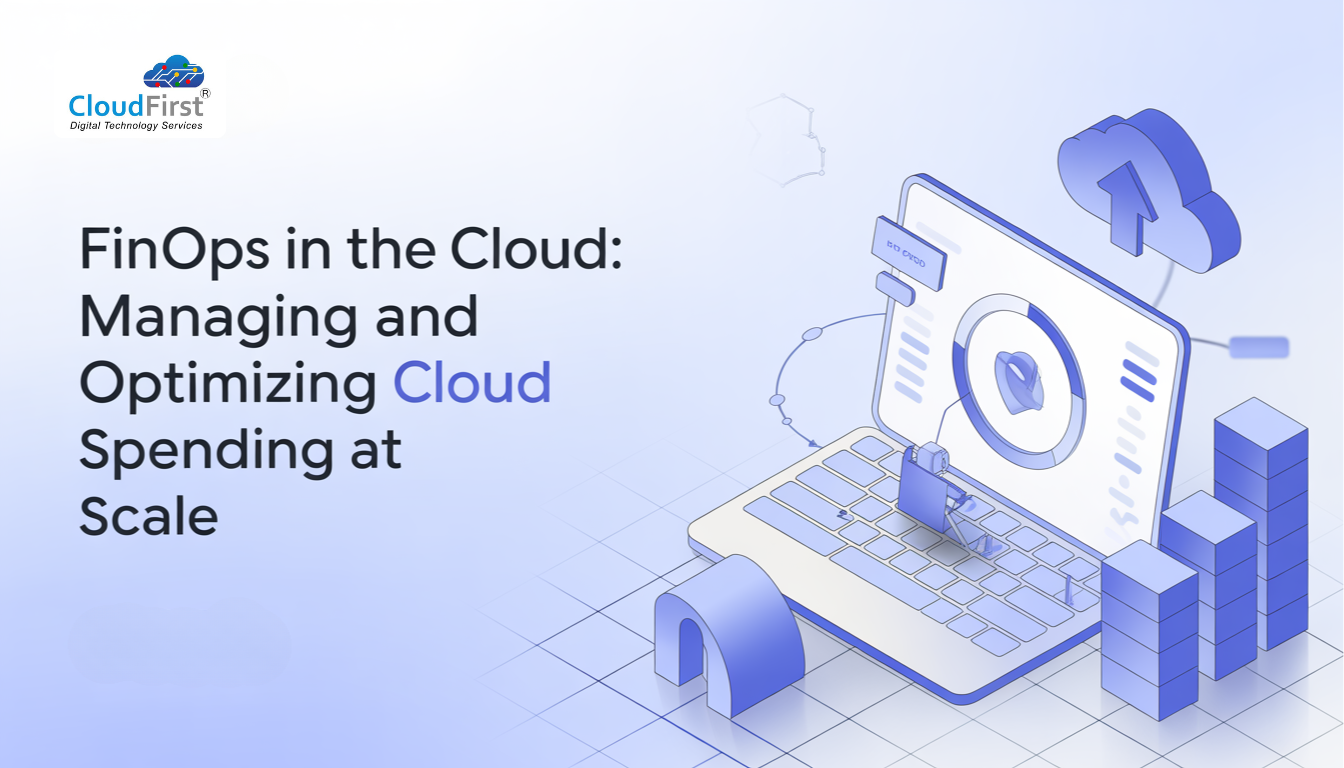
As organizations accelerate cloud adoption, managing cloud costs has become a major operational challenge. Cloud infrastructure offers scalability and flexibility, but it can also lead to unpredictable spending if not managed properly. FinOps (Financial Operations) provides a framework that helps organizations bring financial accountability to cloud usage by aligning engineering, finance, and operations teams.
What Is FinOps?
FinOps, short for Cloud Financial Operations, is a discipline that combines financial management with cloud engineering practices. It enables organizations to monitor, allocate, and optimize cloud spending in real time. The goal is to ensure that every dollar spent in the cloud delivers measurable business value.
Why Cloud Cost Management Is Challenging
Cloud pricing models are complex and consumption-based. Costs may increase due to overprovisioned resources, idle infrastructure, inefficient architectures, or lack of cost visibility. Multi-cloud deployments can further complicate cost management if proper governance is not implemented.
Core Principles of FinOps
Collaboration: Finance, engineering, and operations teams work together to manage costs.
Real-Time Visibility: Continuous monitoring of cloud spending and usage.
Decentralized Responsibility: Teams are accountable for their own cloud usage.
Continuous Optimization: Ongoing evaluation of resources and spending patterns.
The FinOps Lifecycle
Inform: Gain visibility into cloud spending and usage patterns.
Optimize: Identify opportunities to reduce waste and improve efficiency.
Operate: Implement governance policies and maintain continuous financial accountability.
Cloud Cost Optimization Techniques
Rightsizing resources to match workload requirements.
Eliminating idle or unused infrastructure.
Using reserved instances or savings plans for predictable workloads.
Implementing auto-scaling to adjust resources based on demand.
Optimizing storage tiers based on access frequency.
Cost Allocation and Accountability
Organizations should implement tagging policies, cost centers, and chargeback or showback models to ensure that teams understand and manage their cloud spending effectively.
Tools That Support FinOps
Cloud provider cost dashboards, third-party FinOps platforms, monitoring tools, and automation engines help track usage, identify inefficiencies, and recommend optimization strategies.
FinOps in Multi-Cloud Environments
In multi-cloud setups, organizations should adopt unified cost dashboards, standardized tagging policies, and centralized governance frameworks to maintain visibility and control across providers.
Common FinOps Mistakes
Lack of cost visibility, ignoring idle resources, poor tagging strategies, treating optimization as a one-time project, and lack of collaboration between finance and engineering teams.
Business Benefits of FinOps
Reduced cloud costs, improved forecasting, faster decision-making, better collaboration across teams, and stronger return on cloud investments.
Future of FinOps
AI-driven optimization, automated budget enforcement, real-time analytics, and integration with DevOps pipelines will shape the next generation of FinOps practices.
Conclusion
FinOps enables organizations to balance innovation with financial responsibility. By improving cost visibility, fostering collaboration, and continuously optimizing resources, enterprises can maximize the value of their cloud investments while maintaining operational agility.